RESEARCH
Research
My research examines the relationship between data, supervision, evaluation, and the conclusions we draw from machine learning systems.
AI & Machine Learning
Five connected investigations
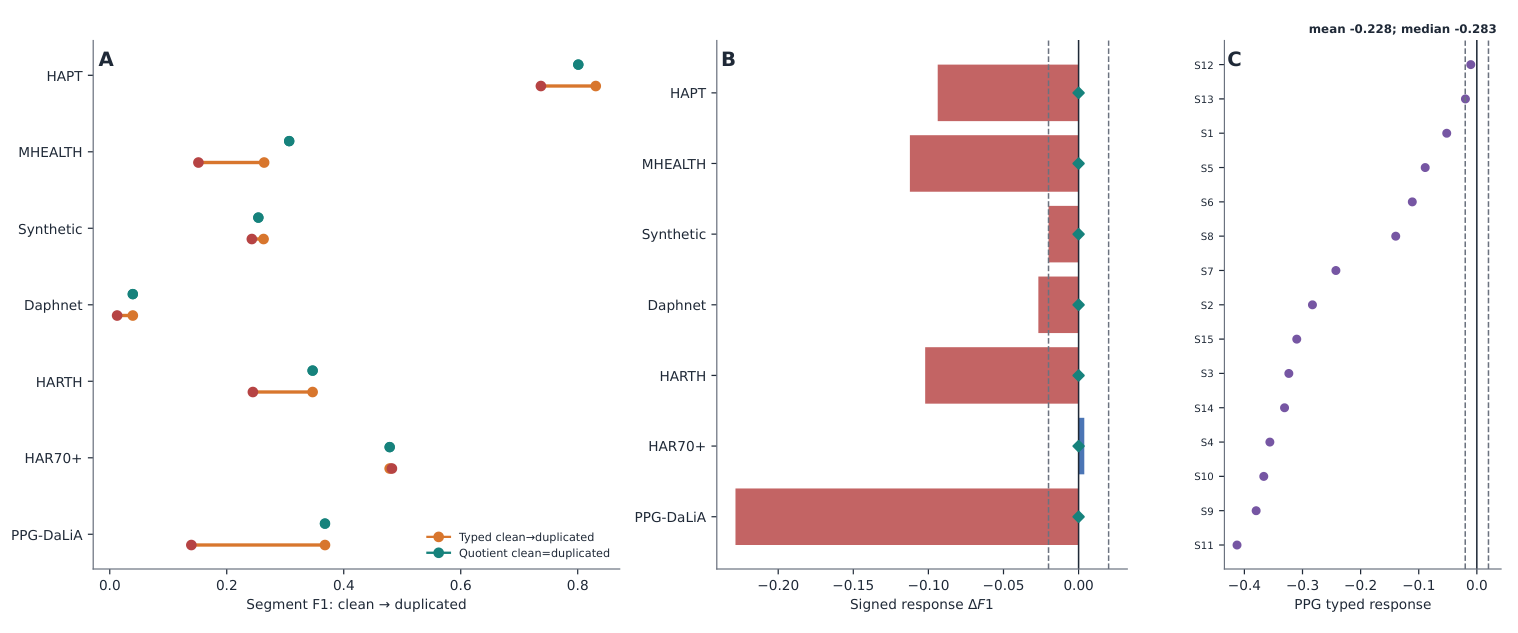
Rows Are Not Evidence Units ↗
Should a model change when a table repeats the same evidence?
Submitted / under review · 2026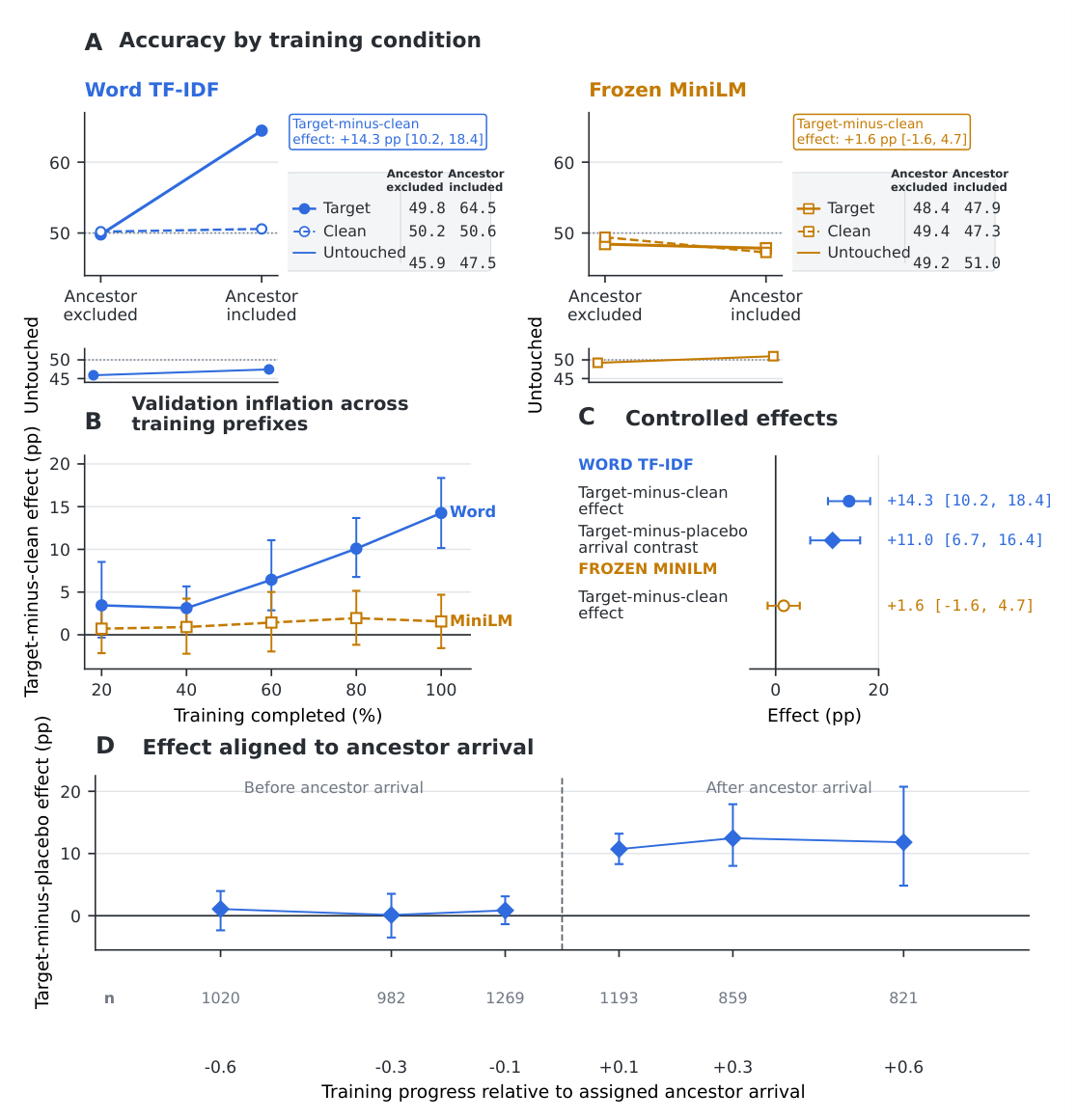
Cross-View Contamination ↗
Can a validation split be contaminated when no complete rows match?
Submitted / under review · 2026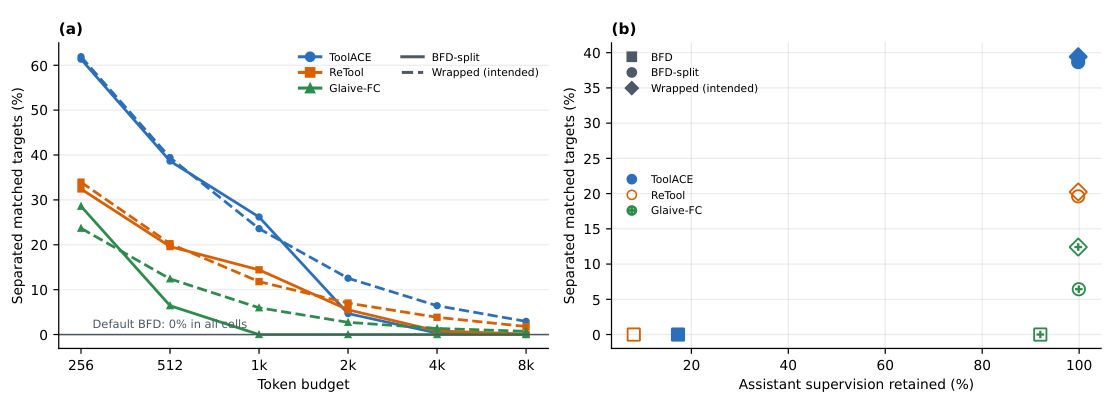
Training on Broken Contexts ↗
Does a supervised answer still have access to the tool output that produced it?
Submitted / under review · 2026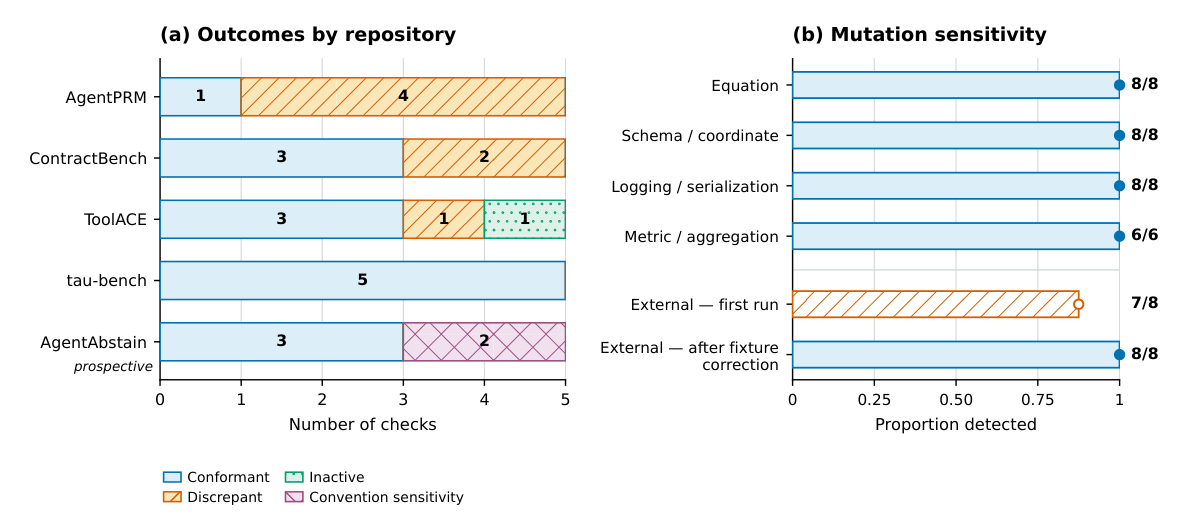
Executable Scientific Contracts ↗
What should an executable check establish about a scientific claim?
Submitted / under review · 2026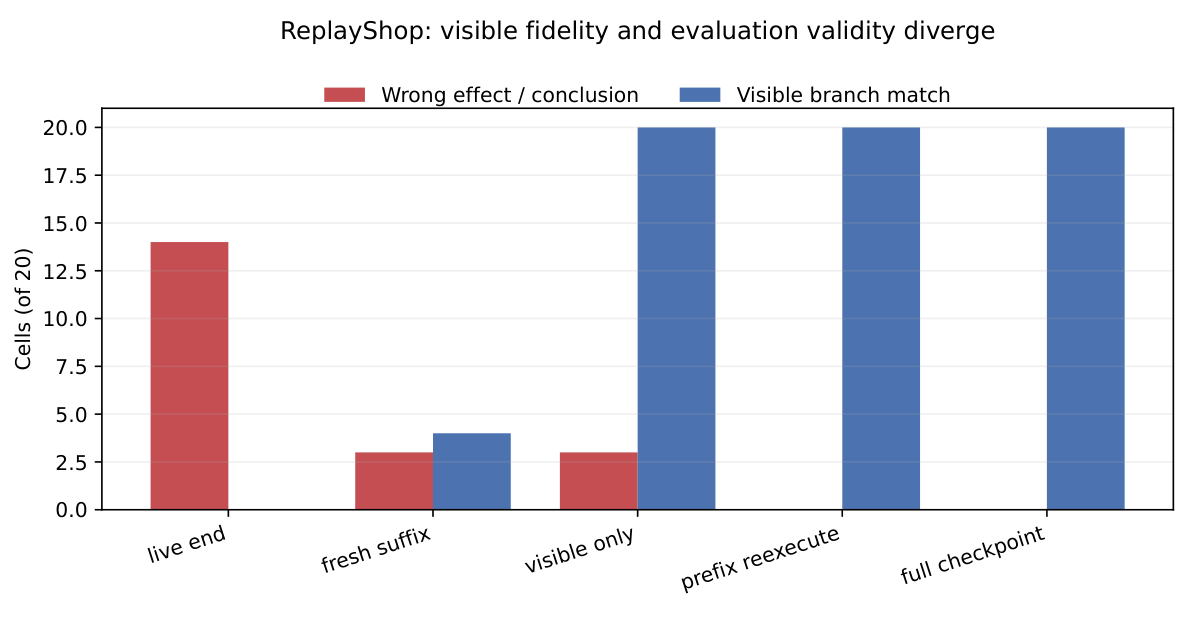
State-Complete Replay ↗
When does replay recover the counterfactual world an evaluator intends?
Submitted / under review · 2026Neural Dynamics & Neural Engineering
My PhD research combines multiregion electrophysiology, signal processing, and machine learning to study seizure propagation.
NEUROSCIENCE & BIOMEDICAL ENGINEERING
Neural Dynamics &
Neural Engineering
Understanding distributed neural activity through multiregion in vivo electrophysiology, signal processing, statistics, and machine learning.
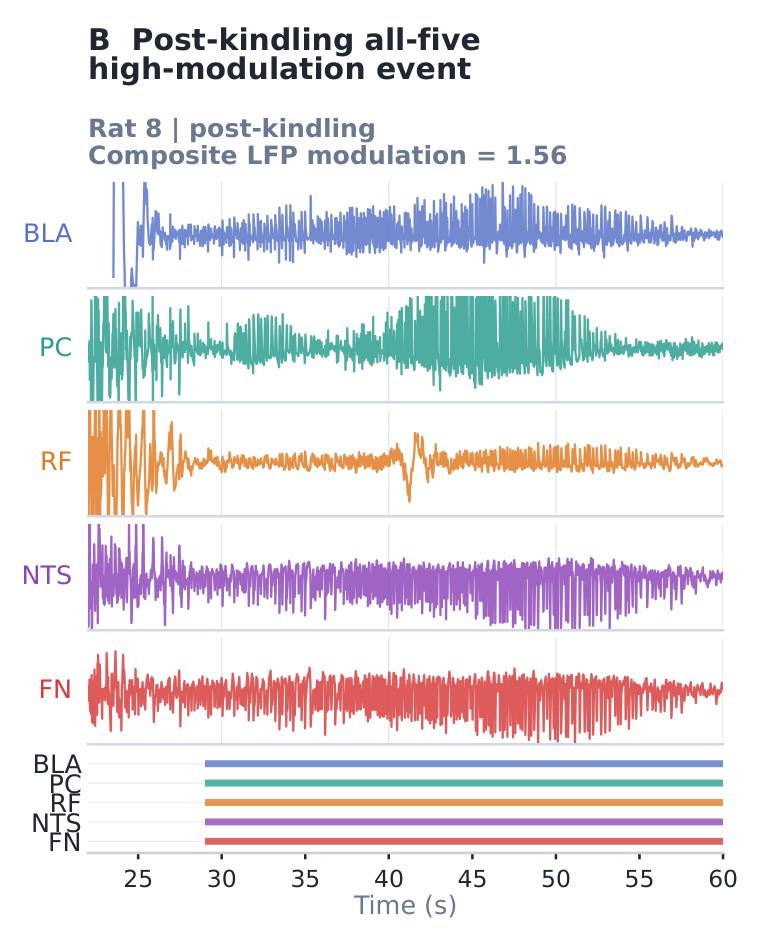
Thesis Figure B.11, Panel B. Post-kindling activity in all five recorded regions. Colored bars mark regional engagement; gray shading marks artifact.
PHD RESEARCH · UNIVERSITY OF TORONTO & UHN
How does seizure activity spread across a distributed neural system?
Across 412 recordings from 12 rats, established kindling was associated with broader activity spanning limbic, cortical, brainstem, and cerebellar regions.
95% CI 0.660–1.383
01 / MULTIREGION INVOLVEMENT
Seizure expression across the recorded network
Recordings from BLA, parietal cortex, reticular formation, NTS, and fastigial nucleus reveal a post-kindling shift toward broader and stronger multiregion activity. Composite LFP modulation increased by 4.707 units (95% CI 3.365–5.945), with increases in all five regions.
Configurations containing brainstem or cerebellar regions became more frequent. Behavioral stage 5 seizures showed greater spatial extent and modulation than stages 3–4.
02 / TEMPORAL DYNAMICS
How neural activity evolves after stimulation
In 309 complete five-region recordings from 10 animals, the main temporal analysis found an early-to-later decline in signal magnitude and 1–55 Hz power. Signal SD decreased in all 10 animals and power in nine.
Spectral analysis, wavelets, cross-frequency coupling, and directional analysis characterize the changing relationships between regions. BLA-linked directional structure is strongest close to stimulation offset and weakens later.
03 / ISOFLURANE & PHYSIOLOGY
Neural activity under changing anesthetic conditions
An industry-sponsored study combined hippocampal, cortical, brainstem, and cerebellar LFP with breathing rate, oxygen saturation, and heart rate during controlled 4-AP and isoflurane experiments.
Paired within-animal analysis found approximately 197% higher hippocampal power when isoflurane fell from 2.5% to 1.5%. Increasing isoflurane to 4.5% reduced parietal-cortex power by approximately 64%.
04 / PHYSIOLOGICAL MACHINE LEARNING
Evaluation across animals and repeated recordings
I develop temporal and graph representations for physiological recordings, including CNNs, recurrent models, TCNs, GNNs, graph transformers, and self-supervised approaches.
Preprocessing, feature scaling, model fitting, and calibration are estimated from training animals. Group-held-out evaluation tests transfer to unseen animals, while animal-level aggregation preserves the structure of repeated recordings.
Side projects

WC26 Predict ↗
A small website I built for friends to follow the 2026 World Cup, make match predictions, and place friendly bets.